
August 4th, 2026
Health improvement work often defaults to a single epistemic lens — positivist, linear, deterministic — because it has proven so useful for problems like germ theory or coronary disease. But communities are complex systems, not clocks, and a single lens misses what matters most. Drawing on systems thinking and community-engaged methods like Group Model Building, this talk argues for "progressive" epistemic lenses: matching our way of knowing to the problem at hand, using multiple methods where warranted, and understanding rigor as something we bring to any lens rather than a property of one. Case examples come from current work.
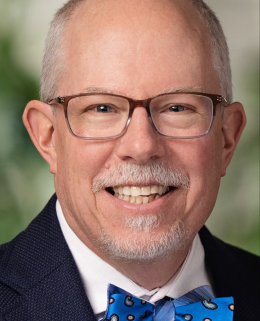
Donald Nease Jr, MD
Dr. Nease is an Adjoint Professor of Family Medicine at the University of Colorado – Anschutz Medical Campus, where he serves as the Director of Community Engagement for the Colorado Clinical and Translational Sciences Institute. He completed his undergraduate degree and medical school at the University of Kansas, residency at the Medical University of South Carolina in Charleston and a Faculty Development Fellowship at the University of North Carolina – Chapel Hill. Dr. Nease’s passion is to improve health in partnership with communities, patients, clinicians and healthcare. He works this territory from the level of individual interactions to community and population-based interventions.
